
Introduction
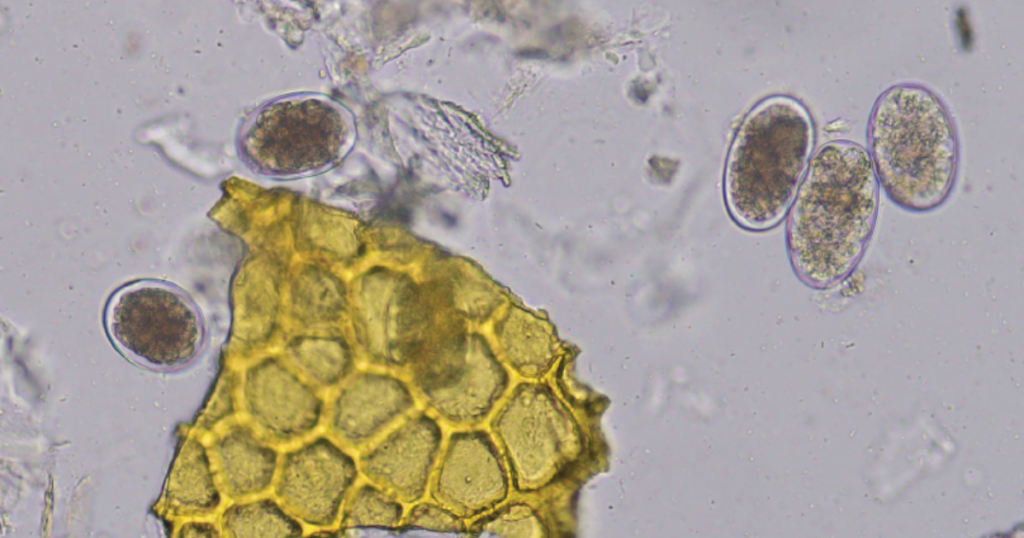
Untreated, Ancylostoma caninum infection can cause potentially fatal anemia and ill-thrift in young puppies. A. caninum is also of concern due to risk of zoonotic transmission.1
A. caninum infection has historically been managed effectively with routine anthelmintic treatment; the emergence of multidrug-resistant (MDR) hookworm strains poses a threat to both animal and public health. MDR hookworm infections have been reported in dogs with a history of frequent deworming, such as racing greyhounds,2 but also in pet dogs in the United States.3
While additional investigation into safety and efficacy is needed, one drug that has shown promise is the octadepsipeptide anthelmintic drug emodepside.4 Notably, emodepside has been shown to be effective against nematode parasites resistant to other classes of anthelmintics.5,6 In the U.S., emodepside is labeled for use in combination with praziquantel as a topically administered solution (Profender®) in cats only.7
Emodepside has been found to be effective against A. caninum at a dose of 0.5 mg/kg; however, Profender® is dosed at 1mg/kg in order to achieve adequate efficacy (>/=90%) against T. vulpis. 10
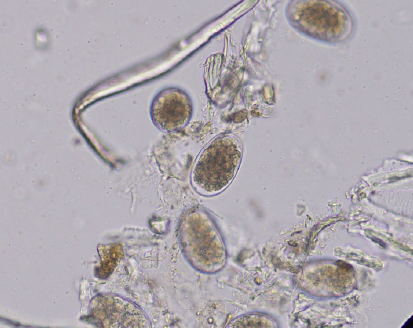
Due to the unavailability of an approved canine product containing emodepside in the U.S., off-label use of emodepside for dogs infected with MDR hookworm has been discussed as a last resort possibility. According to “Persistent or Suspected Resistant Hookworm Infections” by Drs. Jimenez Castro and Kaplan, this last resort should be considered only after differentiating between reinfection, multidrug resistance, and larval leak (the recurrence of a hookworm infection caused by the reactivation of dormant larvae that were previously encysted in body tissues; these larvae become active again and migrate back to the small intestine, where they reestablish the infestation). This can be accomplished via FEC reduction testing, in vitro drug bioassays on the hookworms in question, or by molecular testing for resistance.
Diagnosis of MDR hookworm can be made only after determining that accurate drug dosing was used, the drugs were used properly, all fecal samples had been handled correctly, FEC using proper laboratory techniques was performed, and the FEC method (in this case, mini FLOTAC) used for the pre- and post-treatment samples was consistent.8
A functioning p-glycoprotein pump is necessary to protect the blood-brain barrier and prevent neurotoxicity11,12 and negative heartworm status is important; emodepside’s nematode adulticide activity increases the risk of pulmonary embolism and anaphylaxis due to rapid paralysis of adult heartworms in heartworm-positive dogs.8,9
Treatment should be done after a 12-hour fast; the form of emodepside in Profender® has a modified release when taken orally in fasted animals. Feeding leads to rapid uptake of the drug, leading to increased plasma drug levels. In these fed patients, tremor and ataxia have been observed.10
Methods
A 2.5-year-old MC 29-kg Greyhound initially presented to the primary care service at the University of California, Davis School of Veterinary Medicine in July of 2024. He had soft stool (Purina Fecal Score of 4-5), had previously tested positive for hookworm (A. caninum), and had been treated with fenbendazole and metronidazole (doses unknown), praziquantel 9mg/kg, pyrantel pamoate 26mg/kg + febantel 27mg/kg and topical imidacloprid 10% w/v + moxidectin 2.5% w/v and milbemycin oxime 0.8mg/kg.
Between July 2024 and January 2025, repeat FECs showing minimal-to-no decrease in egg count followed by triple drug therapy were repeated six times. Beginning in December of 2024, Advantage Multi® was applied every 14 days for three treatments.
In January of 2025, we discussed use of off-label oral emodepside based on Drs. Kaplan and Castro’s dosing, as the repeated FEC and treatments had shown MDR hookworm infection to be highly likely and reinfection and larval leak to be highly unlikely.13 MDR1 testing was ordered along with heartworm antigen and microfilaria tests, which were all negative.
On March 19, 2025, the patient was given emodepside 1 mg/kg orally. He was monitored all day in hospital; no adverse effects were noted and FEC was 520 EPG (baseline for follow-up).
On March 31, 2025, the FEC was zero EPG/100% reduction of eggs. However, on April 30, 2025, the client reported borborygmus and soft stool for two days. FEC 3 was EPG (all prior samples were run in-house by the same parasitologist; this sample was sent to IDEXX). Owners reported picking up feces promptly most of the time.
In May of 2025, emodepside 1mg/kg PO was repeated with no adverse events. Pre-second treatment, the FEC was 2,500 EPG. At this time, the Antech KeyScreen fecal PCR panel showed a high Ancylostoma spp. burden and the A. caninum resistance marker was undetected.
In May of 2025, the FEC was zero; however, at recheck in June of 2025, the FEC was 20 EPG. Emodepside 1mg/kg PO was repeated in July of 2025; the Antech KeyScreen fecal panel was repeated, and at that time the A. caninum resistance marker was detected.
In August of 2025, the FEC was again zero; however, one additional emodepside treatment was administered. FEC was zero one month later and, in January of 2026, a fecal float with centrifugation showed no ova or parasites and Ancylostoma spp. remained undetected in the Antech KeyScreen fecal panel.
We recommend monthly FEC x three months, then every six months thereafter. If hookworms returned, we planned to consider another treatment with emodepside.
Results
The patient in this case study did not exhibit any adverse effects from oral emodepside treatment. At the time of writing, the patient’s fecal egg count is zero and the author is optimistic that this represents a cure.
Conclusion
If a case of drug-resistant A. caninum is suspected, it is important to use caution, consult with specialists, exhaust traditional therapies, and follow due diligence to be certain that the client is following medication and environmental management directions as prescribed.
Larval leak must also be ruled out via repeated treatments with traditional therapies and monitoring of fecal egg reduction counts using consistent methods throughout treatment. Testing to look for markers for benzimidazole resistance can augment a clinician’s confidence that the organism is drug-resistant.
MDR1 testing is critical to rule out mutation, as dogs with homozygous MDR1 mutation have a blood-brain barrier defective for P-glycoprotein, allowing emodepside to lead to neurotoxicity.14 Heartworm antigen and microfilaria tests are needed to rule out heartworm infection.
There is insufficient data at this time to confidently state that, in dogs without MDR1 mutations, oral treatment with emodepside is safe. However, most cases of toxicity appear to be in patients who received an overdose of emodepside or who were homozygous for the MDR1 mutation.15,12
Discussion
One area of potential for further inquiry in this case is that, initially, the genetic marker for benzimidazole resistance was not detected. Possible explanations for this include alternate mechanisms of resistance (KeyScreen fecal PCR only tests for F167Y polymorphism on the ß-tubulin isotype-1 gene).16
The initial treatment with emodepside did not result in a lasting cure. This may represent persistent infection and lack of complete efficacy of the treatment—or, more likely given eventual resolution, may be due to reinfection from the environment. It may also be due to “larval leak.”13
A 2023 study of twenty different dog breeds in the U.S. and Canada reported that F167Y polymorphism associated with benzimidazole resistance was found in 11.3% of dogs tested.17 A study focused on the southern U.S. found that 74% of hookworm resistance was found in non-Greyhound breeds;18 this case therefore is of importance to the general canine population in the United States.
Dr. Halperin thanks and acknowledges the following individuals for their invaluable contributions to this case: Erik Olstad, DVM; Andrew Moorhead, DVM, MS, PhD, DACVM (Parasitology); Lauren Camp, MS, PhD; and Karen Shapiro, DVM, MPVM, PhD.
References