If you are having trouble logging in to your account, it may be a pop-up issue. Please use Chrome or Edge to login. Click here for more information.

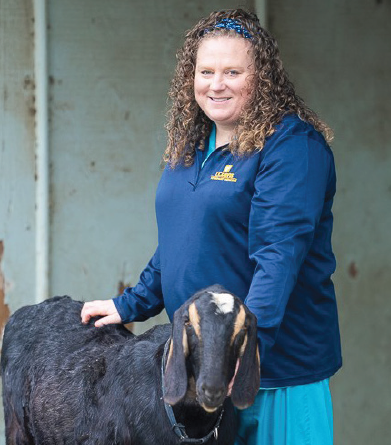
This article was originally printed in the May/June 2026 issue of the California Veterinarian magazine.
CVMA: What inspired you to pursue your VTS?
SARAH BLASCZYNSKI: About five years into the profession, I had the drive to learn more. At the VMTH, you are constantly surrounded by clinical students and residents who are in the process of learning. I found myself always listening in during rounds and case discussions. At UC Davis, we see an average of 1,000 patients a year with a variety of medical/surgical cases. I am lucky that I have experience working with multiple species with a wide variety of different medical conditions.
I pursued my VTS to expand my knowledge and enhance my skills as a technician. This deeper understanding has made me more effective in my role and, ultimately, a stronger advocate for my patients.
Why did you choose internal medicine with a focus on large animals?
I have always had a passion for working with livestock. Growing up, I raised sheep in 4-H and FFA with a goal of becoming a veterinarian. I completed my bachelor’s degree in animal science at UC Davis while competing at the NCAA Division I level in softball and track and field.
After graduation, I saw a video promoting a veterinary technician program. It opened my mind to alternative careers in veterinary medicine, and I was sold on the idea of pursuing a technician career.
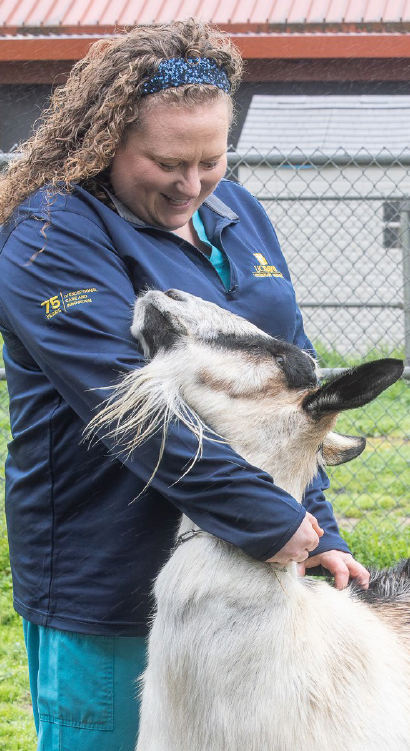
My first job as an RVT was in the livestock medicine and surgery service here at the VMTH, so I was immersed in the world of internal medicine from day one. The great part about this service is we see all species of livestock patients during medical appointments. Procedures and surgeries we do range from disbudding goat kids and performing “spa day” pedicures on companion pigs to emergency dystocias (on all species).
How has earning your VTS affected/expanded your career?
Earning a VTS has significantly expanded my career by opening doors to higher-level opportunities. It has allowed me to speak at professional conferences where I can share specialized knowledge and insights with peers. Additionally, it can give individuals opportunities to write articles and book chapters, contributing to the veterinary field’s literature and educating others.
What is your favorite part about being specialized in large animal internal medicine?
My favorite part about my specialization is the opportunity to be part of a large and supportive professional community across the country. This network of colleagues allows for collaboration, sharing of knowledge, and learning from others who are passionate about advancing large animal patient care.
I also value the constant sense of curiosity that the field engenders. Large animal internal medicine encourages continuous learning and critical thinking as we work to better understand the complex disease processes affecting our patients. Each case provides an opportunity to deepen our knowledge and refine our approach to diagnosis and treatment, ultimately improving the care we provide.
What kind of skills and/or personality do you feel you need to earn a VTS (IM-LAIM) and then excel with it?
It is important to have an openness to new ideas and approaches. Working with a variety of veterinarians exposes you to different perspectives, diagnostic strategies, and treatment methods, and being receptive to those experiences helps you grow professionally.
Equally important is having the drive to continue learning. The field of internal medicine is constantly evolving, and maintaining curiosity and motivation to expand your knowledge allows you to better understand disease processes and provide the highest level of care for your patients.
What advice would you give to an RVT interested in pursuing a VTS?
Stay curious and committed to continuous learning. Advancing your knowledge and skills is an important part of growing in your career and the VTS process encourages you to deepen your understanding of your specialty.
It is also important to remember that you are not alone in the process. The VTS community is very supportive and mentorship plays a significant role in helping candidates succeed. Seeking guidance from experienced specialists and connecting with others who share similar goals can make the journey both achievable and rewarding.
Is there anything else you’d like to add?
There is a lot of care in small animals that can be adapted to livestock now that many of our patients are considered companion animals. This allows us to do procedures on livestock that we had rarely done before, which not only will allow us to provide a wider range of care for these animals but will also provide more hands-on training opportunities for our veterinary students.