This article was originally printed in the Jan/Feb 2026 issue of the California Veterinarian magazine.
Growing up, I always wanted to pursue a career that combined working with animals and biological science. When it came time for college, I attended San Diego State University (SDSU), graduating with a BS in zoology and a minor in chemistry. I initially planned to pursue a career as a marine biologist and had wonderful experiences working part-time as a volunteer aquarist, then as a docent with the education department at the Scripps Aquarium in La Jolla, and finally as a student employee at the Naval Ocean Systems Center Marine Mammal Center in Point Loma.
I also became interested in the possibility of working in neuroscience with marine animals and completed a student internship with Dr. Ted Bullock at the Marine Neurosciences Unit at the Scripps Institution of Oceanography.
As I progressed through my undergraduate work, I started to explore the possibility of another career working with animals utilizing a scientific background. I was very grateful to receive invaluable support and guidance from SDSU’s two faculty veterinarians, Drs. Harry Plymale and Robert Cooper, who suggested I consider becoming a veterinarian. I started working parttime as an assistant at a small animal hospital and riding with two of the large animal—primarily equine—mobile veterinarians, Drs. Warren Dedrick and Barney Gardner.
I graduated SDSU in 1980 and was very fortunate to be accepted to UC Davis the same year. I initially planned to be a mobile equine veterinarian, but halfway through veterinary school I became more interested in small animal practice, including neurology. I worked as an assistant/technician at small animal practices during summer and school breaks, including working as a technician for radiologist Dr. Jerry Owens once a week, which kindled my interest in radiology. After graduating from veterinary school in 1984, I completed an internship under Dr. Steve Ettinger in Los Angeles.
I had always maintained my interest in neuroscience and had an opportunity to apply for a postdoctoral position grant at UC San Francisco, which I received. I started a research program at the university in neural plasticity, but found that I preferred clinical work to bench research and missed practice very much. I decided to go back into general small animal practice and become a more experienced general practitioner. I have always enjoyed general practice and spent the next several years working in daytime general practices and emergency clinics on weekends. I decided I wanted to be able to do more in the profession and applied for a radiology residency.
I decided I wanted to be able to do more in the profession and applied for a radiology residency.”
I was accepted to the program at the College of Veterinary Medicine at the University of Minnesota, where I received great clinical training with Drs. Patty Walter and Garry Johnston. The program also had a strong academic bent that required completion of at least a master’s degree besides the clinical training.
So after my clinical training, I stayed on as a clinical instructor and staff radiologist, and with the guidance of Dr. Carl Osborne, wrote several grants to get enough funding to complete my PhD research in clinical applications of ultrasonography in renal disease in conjunction with the Department of Radiology at the School of Medicine with support from Drs. Kurt Amplatz and Janis Letourneau. During my years at St. Paul, I continued to worked part time in general practice and the local emergency clinic. It was also my great good fortune to meet and marry my wife, Lorelei, while at St. Paul.
I spent the next year as a visiting instructor/staff radiologist at Purdue University with Drs. Bill Blevins and Rick Widmer, both great radiologists who helped prepare me to pass the American College of Veterinary Radiology board certification examination.
I had planned to pursue a veterinary school faculty position in radiology next, but at that time, opportunities were very few. I spent a year as a general staff radiologist performing diagnostic radiology, nuclear medicine, including radioiodine therapy for hyperthyroid cats, and radiation therapy at a specialty practice in Dallas, after which I decided to return to Northern California and start my own mobile radiology consulting practice.
My wife and I arrived with one car between us and $300.00. Lorelei resumed working as a registered nurse, and I worked nights and weekends at local emergency clinics, plus some daytime general practice relief work while I built up my referral practice of mobile ultrasound, film reading sessions, and radiographic interpretations.
Now, over 20 years later, the landscape of veterinary practice and veterinary radiology has shifted. My first “mobile” ultrasound unit weighed 77 pounds, and my current unit weighs 17 pounds and provides amazing capability compared to earlier units. The days of chemical processed radiographs with developer, fixer, and wash fluid have been replaced by digital radiography units.
As a solo practitioner wearing two hats— as both a mobile sonographer and teleradiologist— my hours are long and the buck stops with me, but I would not trade my practice for any other.”
My radiographic interpretation part of my practice is now via web-based teleradiology. Envelopes of hard copy radiographs are no longer delivered to my home office for interpretations. With the advent of teleradiology, I only do a few film reading conferences nowadays.
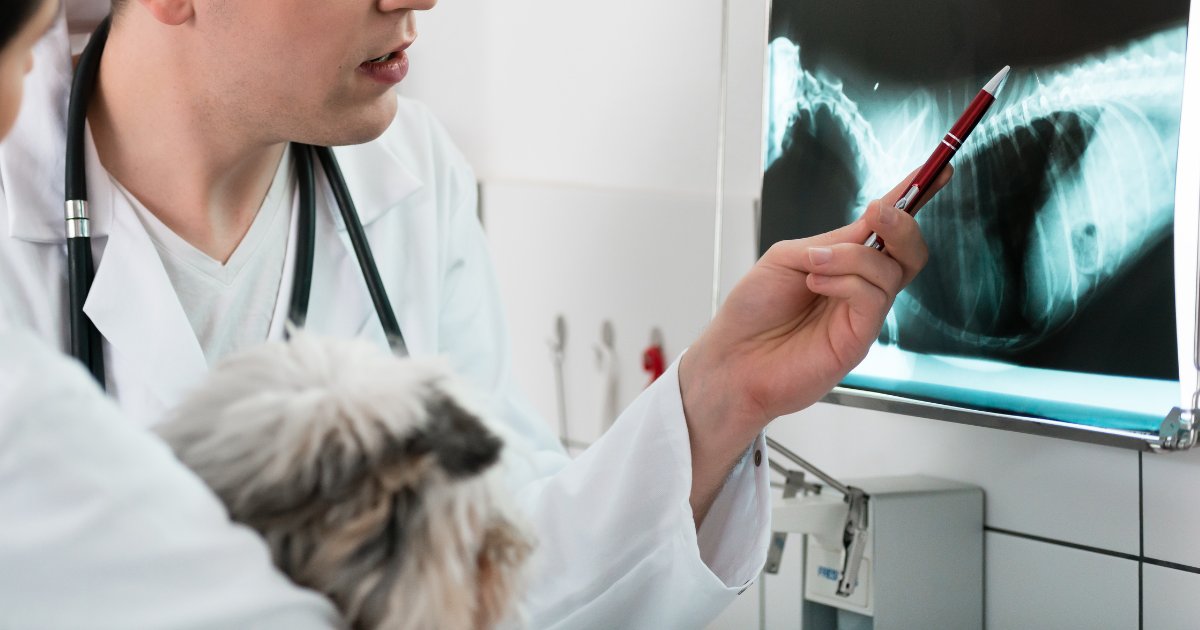
When I began my career, I was trained as a general diagnostic radiologist in both small and large animals, as well as an echocardiographer, nuclear medicine practitioner, and radiation therapist. Radiology in veterinary medicine has become much less diverse, as most practitioners now are teleradiologist practitioners or small animal diagnostic radiologists. I perceive a trend for private mobile radiology consulting practices to be group practices rather than solo practices like mine.
Throughout my earlier career, most practices were privately owned, and most specialists worked at veterinary schools with few private referral hospitals. Most veterinary school graduates became general practitioners. Typically, emergency clinics were also organized and owned by the local veterinary practitioner association. There are now numerous private practice specialty hospitals that include emergency service, which has supplanted the traditional local veterinary practitioner association ownership model.
Younger veterinarians now have the option of referral of a case to numerous area specialty hospitals over calling on a mobile sonographer to help them work up a case. There are now many national corporate teleradiology companies that can be called on to provide teleradiology services. Oftentimes, corporate-owned hospitals have exclusive partnerships with such national companies.
As a solo practitioner wearing two hats—as both a mobile sonographer and teleradiologist—my hours are long and the buck stops with me, but I would not trade my practice for any other. Every day is different, and I get to work with a varied group of dedicated general practitioners whose support and partnership I value immensely. I am grateful for the wonderful career I enjoy (and the support of my wife Lorelei, who helps to make it all possible!).