Dr. Erin Gibson received her DVM degree from the University of California, Davis, after which she completed a rotating internship at the University of Minnesota and surgical residency at UC Davis. She completed a one-year fellowship in minimally invasive surgery and interventional radiology at UC Davis and is a Diplomate of the American College of Veterinary Surgeons as well as a Fellow of Minimally Invasive Surgery (Small Animal Soft Tissue). She is currently an assistant professor of minimally invasive soft tissue surgery at the University of Pennsylvania. Her research interests include minimally invasive surgery and interventional radiology.
8:00 AM-9:00 AM Mass Removal: Defining the Appropriate Depth of Excision
This lecture will address one of the most common intraoperative challenges in soft tissue surgery: determining the appropriate depth of excision for cutaneous and subcutaneous masses. Attendees will learn how tumor type, grade, and location influence margin planning, when pre-operative diagnostics should guide surgical strategy, and how to recognize cases that warrant referral based on anticipated reconstructive complexity.
9:05 AM-10:05 AM BOAS in the Canine: Surgical Approach, Folded Flap Palatoplasty vs. Standard Staphylectomy, and Stenotic Nares
This presentation will provide an overview of surgical management of brachycephalic obstructive airway syndrome in dogs, with a focus on practical techniques applicable in general practice. Topics will include correction of stenotic nares, indications for soft palate resection, and a comparison of standard staphylectomy versus folded flap palatoplasty, including a discussion of outcomes and case selection considerations.
10:30 AM-11:30 AM Head and Neck Surgery in the Feline: BOAS and Ventral Bulla Osteotomy
This lecture will cover surgical management of upper airway and middle ear disease in feline patients, with an emphasis on conditions commonly encountered in brachycephalic cat breeds. Attendees will gain an understanding of feline BOAS recognition and correction, as well as the indications, surgical anatomy, and technical considerations for ventral bulla osteotomy including management of nasopharyngeal polyps and associated complications.
11:35 AM-12:35 PM Surgical Complications: Definition, Management, and the Surgeon’s Role
This presentation will explore how surgical complications are defined, classified, and communicated in veterinary practice, including an introduction to standardized classification frameworks. The lecture will address the practical and emotional dimensions of complication management—including the surgeon’s responsibility to the patient, client, and themselves—and will use real-world case examples to illustrate how complications are recognized, managed, and learned from.
8:00 AM-9:00 AM Surgical Management of Lower Urinary Tract Obstruction
This lecture will provide a comprehensive overview of surgical options for managing urinary tract obstruction in small animals, including bladder and urethral calculi, minimally invasive techniques, and perineal urethrostomy in the feline. Practical tips and tricks for urethral catheterization will be covered alongside a discussion of when surgical intervention is indicated, case selection, and post-operative management considerations.
9:05 AM-10:05 AM GI Surgery in Small Animals: Updates, Tips, and Tricks
This presentation will review current principles and emerging updates in small animal gastrointestinal surgery, with a focus on practical techniques relevant to the general practitioner. Topics will include intestinal anastomosis, intraoperative assessment of tissue viability, management of gastric dilatation-volvulus, and a discussion of minimally invasive approaches where applicable.
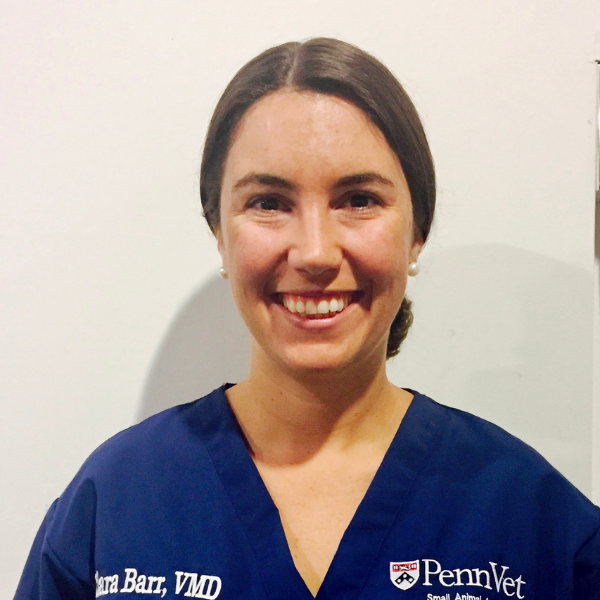
Dr. Ciara Barr completed her veterinary education and anesthesia residency at the University of Pennsylvania School of Veterinary Medicine and became board-certified as a veterinary anesthesiologist in 2017. She earned a master’s degree in healthcare quality and safety at the University of Pennsylvania’s Center for Healthcare Improvement and Patient Safety in 2025. Dr. Barr is an associate professor of clinical anesthesia at the University of Pennsylvania School of Veterinary Medicine and the quality and safety officer at the veterinary hospital, where she focuses on improving patient safety in anesthesia.
10:30 AM-11:30 Complex Patients, Practical Plans: Anesthesia for Patients with Comorbidities
Patients with systemic disease present significant anesthetic challenges. This session reviews practical approaches to anesthetizing patients with common conditions like renal, hepatic, and endocrine disease. Emphasis will be placed on drug selection, fluid therapy, monitoring, and intraoperative decision-making to safely manage complex patients.
11:35 AM-12:35 Anesthesia for Cardiac Patients: Practical Decision-Making for Safer Care
Cardiac disease is common in small animal practice, but anesthetic planning can feel intimidating. This session focuses on practical approaches to safely anesthetize dogs and cats with common cardiac conditions. We will review risk stratification, drug selection, monitoring priorities, and intraoperative management strategies that can be readily applied in practice to improve patient safety and confidence.
8:00 AM-9:00 AM Brachycephalic Anesthesia: Reducing Risk in High-Risk Patients
Brachycephalic patients present unique anesthetic risks, particularly during airway management and recovery. This session reviews practical strategies for preoxygenation, induction, airway control, intraoperative management, and recovery planning. Emphasis will be placed on anticipating complications and implementing simple, high-impact interventions that can significantly improve outcomes in these commonly encountered high-risk patients.
9:05 AM-10:05 AM Local and Regional Anesthesia Made Simple: Practical Techniques for Everyday Cases
Local and regional anesthesia techniques can dramatically improve analgesia and reduce anesthetic requirements. We will review anatomy, techniques, drugs, and practical tips to increase success and safety, empowering practitioners to enhance perioperative pain management in everyday cases.
10:30 AM-11:30 AM When Anesthesia Goes Sideways: Managing Common Intraoperative Complications
Hypotension, hypoventilation, and unexpected arrhythmias are common anesthetic challenges. This case-based session provides a structured approach to recognizing and managing common intraoperative complications. Attendees will leave with practical troubleshooting strategies, decision-making frameworks, and confidence to intervene early and effectively when patients become unstable under anesthesia.
11:35 AM-12:35 PM Anesthesia for Dogs with Laryngeal Paralysis: Airway Planning from Induction to Recovery
Dogs with laryngeal paralysis are at increased risk for respiratory distress, regurgitation, and aspiration around the anesthetic period. This session reviews practical strategies for preoperative stabilization, induction planning, airway management, monitoring, and recovery to reduce complications and improve patient safety.