This article was originally printed in the May/June 2022 issue of the California Veterinarian magazine.
I’m a big fan of the Marvel movies. Not like, going-to-Comic-Cons-dressed-like-Thor kind of fan. But I’ve definitely watched every single Marvel Universe movie at least a dozen times.
There’s something about these superheroes that pulls me in. Just the other day, my wife and I were watching an episode of WandaVision and I found myself wondering, “Could Wanda beat Thanos in a fight?” So, I turned to Google, typing into my search query, “Who is stronger, Wanda or Thanos?”
It depends on the source you read, but it seems that Wanda’s powers are potent and only grow stronger the angrier she gets. If Wanda were to find herself in a particularly perturbed state, it is possible she could kick Thanos’ butt all by herself.
Such strength is alluring. We admire it, revel in it, and even find ourselves a bit jealous of it. As human beings, we yearn to be strong so we can persevere through, overcome, and thrive despite the obstacles we seem to inevitably encounter along the journey of life.
Well, I’m here to tell you something. You already have superpowers. I know this because I know two things about you: you are a veterinary professional, and you are reading this article right now.
It’s U-Shaped
In a compelling piece of research published in 2011, Mark Seery proved me right.
In his study, Seery measured variables related to adversity, challenge, and life stress. He plotted these “stress scores” alongside well-being variables like life satisfaction and resilience.
We tend to believe our resilience superpower comes only in the absence of adversity. Put another way, we assume those who have things easiest are likely to be the happiest and most resilient.
On a graph, this would look like two lines going in opposite directions. The line for resilience and happiness would start in the top left corner while the line for stress would begin on the bottom left. As the stress line moved up and to the right, a straight arrow toward the upper corner of the graph, the resilience and happiness line would move down toward the lower right corner, decreasing as stress increases.
The graph would look very much like a big “X”—an appropriate shape because it’s all wrong.
Seery’s research paints a very different picture. It turns out that, on average, people with the easiest life—the least amount of distress—tend to have the lowest resilience and life satisfaction scores.
Resilience is not a superpower we find outside ourselves. It is a capacity we are all born with, like a muscle already in our body. Much like muscles grow when challenged by increasingly heavy weights, our resilience superpower is unleashed and enhanced not despite our struggles, but because of them.
Seery’s findings drew a graph that wasn’t X-shaped but was instead U-shaped. As he might say, a moderate-to-significant amount of struggle in life is actually good for us.
Reconfiguration Resilience—Your Existing Superpower
Imagine a large, healthy tree in your yard.
One day, a summer storm brings a tornado to your area. Though the tornado doesn’t hit your tree directly, it comes close enough to violently shake it. The trunk, though challenged, stays strong and the tree survives, but not without damage. The storm passes; the tree still lives—hurt, but alive. And over time, new branches grow, stronger than the ones they replaced.
That is a visual example of what psychologists call reconfiguration resilience.
I’m not sure there are words to fully shine light on the unprecedented discomfort, uncertainty, and pain 2020 brought. And yet, like the tree, you were harmed by it but not destroyed. You still stand and your superpowers continue to grow.
Research has shown that when we take stock of the obstacles we have endured and overcome, it can buoy our sense of strength. Looking back at how our resilience muscles have been challenged can empower us moving forward.
Shine light on the power you already possess:
Now, write out your answers to these three questions:
Flexing Your Resilience Muscles
You’ve answered the three questions… now what?
Well, consider our Marvel example….
Spoiler alert—despite all their powers and their strength in numbers, the Avengers lost to Thanos the first time around. With the snap of his finger, Thanos wiped out half of all life in the universe while our heroes helplessly watched.
For a few years the pain of that loss was raw and they struggled to move past it—until Ant Man showed up with a tiny flame of hope. Sparked by this, they looked back on their experience with a new perspective and learned from their struggles. Through the agony of their initial defeat, they recognized their resilience superpowers—collectively, their wit, might, and heart got them through the worst time in their life. Maybe it could help them overcome what now faced them.
It turns out, they did.
Your past struggles have shown you strengths and powers you already possess. And through those struggles you’ve learned new skills, approaches, and ways of thinking and being. There are important lessons that can help you endure and overcome whatever you might be facing today.
So sit with your answers to those questions for a few minutes and think about them. Look for your superpowers and consider how they can serve you now, today.
This wellness series is proudly brought to you by a sponsorship from Boehringer Ingelheim Animal Health.

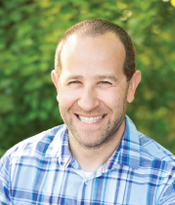
Josh Vaisman, CCFP, MAPPCP
Josh Vaisman is the co-founder of Flourish Veterinary Consulting LLC, a business devoted to promoting the mental wellbeing of veterinary professionals. He has obtained certificates in areas such as Positive Psychology, Workplace Culture, and Building Effective Teams and is pursuing a Master’s Degree in Applied Positive Psychology and Coaching Psychology. Fun fact: Josh is also an avid beekeeper who teaches beginning beekeepers how to tend to their buzzing buddies.