This article was originally printed in the Jan/Feb 2026 issue of the California Veterinarian magazine.
Journey to VTS is a California Veterinarian series spotlighting registered veterinary technicians (RVTs) in California who have earned a Veterinary Technician Specialist (VTS) certification.
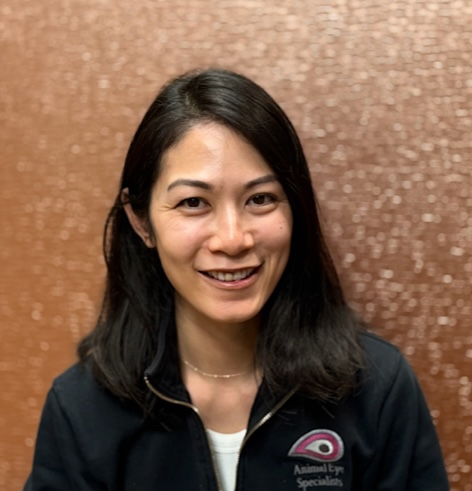
Benita Hwang obtained her VTS in ophthalmology in 2021. She currently works at Animal Eye Specialists in Campbell, California.
CVMA: What inspired you to originally pursue your VTS?
BENITA HWANG: While I value what I’ve achieved earning my RVT degree, I’m always striving to develop myself further and take on new challenges. When the National Association of Veterinary Technicians in America (NAVTA) announced ophthalmology as an academy, I knew immediately it was something I wanted to pursue. It was the perfect opportunity for me to elevate my skills and knowledge.
Why did you choose ophthalmology?
Falling into ophthalmology was an unexpected blessing. I had previously worked in the surgery department of a specialty practice, but when that chapter came to a close, I found myself searching for a new opportunity. By happy coincidence, the veterinary ophthalmology office in my area was hiring. Initially, I approached the position as something that might be temporary, since I didn’t have a strong interest in eyes at the time. However, as I began learning more, I quickly realized ophthalmology never grows boring. There’s something new to discover every day.
What was the certification process like for you?
Obtaining my VTS was a long-term commitment—certainly not something that happens overnight. The process involves two stages. The initial application requires meeting specific criteria, including continuing education credits, documented hours worked, and letters of recommendation. Once that is approved, you submit a final packet containing case logs, detailed reports, skill and knowledge checklists, and other required documentation. If that package is accepted, you then sit for the exam. Fortunately for me, the year I applied coincided with the onset of the pandemic, which worked in my favor since social activities were limited at the time. Nonetheless, it required weekly, consistent, and dedicated effort.
How has earning your VTS expanded your career?
Since obtaining my VTS, new opportunities have opened beyond the traditional technician role. I’ve had the chance to mentor candidates pursuing their VTS, engage in public speaking, and inspire students working toward their RVT degree by showing them there is a broader career path available. And now, I get opportunities like this to share my story and be featured in a magazine!
What is your favorite part about being specialized in ophthalmology?
The most rewarding part I find about ophthalmology is helping patients regain their vision and, in turn, improving their overall quality of life. This is especially meaningful when working with patients that have cataracts, as restoring their sight often feels like giving them a second chance to fully enjoy life. Receiving thank-you cards from clients who share how much this has impacted their pets and families is incredibly fulfilling.
What kind of skills and/or personality do you feel you need to earn a VTS (Ophthalmology) and then excel with it?
You will need a combination of strong technical proficiency and a diligent, self-driven, and genuinely curious mindset. A passion for continuous learning is key, because the journey doesn’t happen overnight. Ultimately, it’s about having both the technical expertise and the drive to elevate yourself.
What advice would you give to an RVT interested in pursuing a VTS?
My biggest advice is to embrace the journey, not just the destination. Pursuing a VTS takes time, dedication, and persistence—but the skills and knowledge you gain along the way are invaluable, whether or not you pass on your first attempt. Most importantly, remember why you’re doing it. Your passion for the specialty will carry you through the challenging moments.
Is there anything else you’d like to add?
Take the time to fully immerse yourself in the specialty before applying—don’t just aim to meet the minimum requirements. A solid foundation of skills and knowledge will benefit you throughout the journey.


 Skip to content