
This article was originally printed in the Nov/Dec 2025 issue of the California Veterinarian magazine.
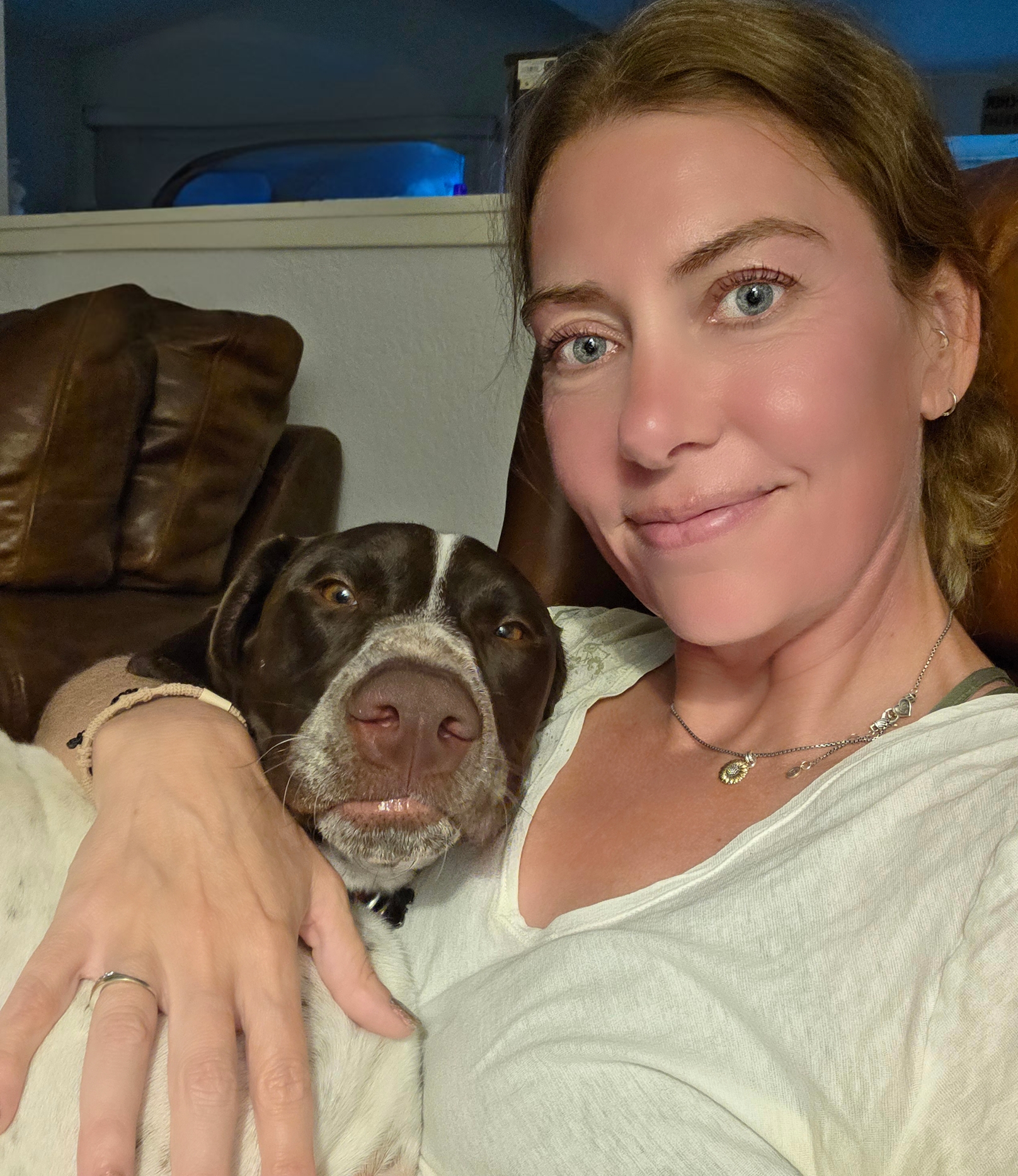
Journey to VTS is a California Veterinarian series spotlighting registered veterinary technicians (RVTs) in California who have earned a Veterinary Technician Specialist (VTS) certification, exploring how and why they became certified, challenges they faced, benefits to certification, their daily life as a specialty technician, and more. Kristin Spring earned her VTS in emergency and critical care (ECC) in 2007 and a second VTS in anesthesia and analgesia in 2010. She currently serves as the regional veterinary technician director for VCA Animal Hospitals in Northern California, supporting 25 general practice, specialty, and emergency hospitals. Kristin’s role focuses on developing veterinary technician teams, strengthening patient care, and building healthy, sustainable hospital cultures.
CVMA: What inspired you to originally pursue your VTS?
KRISTIN SPRING: I’ve always believed veterinary patients deserve top-quality care, with credentialed technicians playing a crucial role in providing that care. Early in my career, advanced training and certification improved both my skills and hospital standards. Pursuing a VTS certification was my commitment to higher care and full technician utilization.
Why did you choose ECC and Anesthesia & Analgesia as your certification specialties?
ECC spoke to the part of me that thrives in high-stakes situations—where rapid assessment, decisive action, and strong teamwork can truly change an outcome. Anesthesia & Analgesia appealed to me because it represents technician utilization at its best.
As a credentialed technician working at the top of my training and certifications, I can take full ownership of the patient’s anesthesia—managing their safety, comfort, and pain—while the surgeon focuses completely on the procedure. That level of trust and collaboration allows each of us to utilize our highest skill set, ultimately creating the best possible experience for both the client and the patient.
What were the certification processes like for you?
I treated the VTS process like an extended externship—not just paperwork or hoops to jump through. I wanted to soak up every bit of knowledge I could, so I chased challenging cases, asked endless questions, and used every patient as a chance to get better. For me, it was about working at the very top of my credentials every single day, not just when the case log or application required it.
Of course, life made sure it wasn’t boring. Halfway through, we had a major house fire. Instead of just moving out and waiting for repairs, we spent the next year living somewhere else while rebuilding the house ourselves—every weekend, every spare hour, covered in dust. Then, just a few days before my Anesthesia & Analgesia exam, my puppy shredded every single study note I had. It took him about 30 seconds. I just looked at him thinking, “Alright then… I guess it’s all from memory now.”
It was tough, but that’s what made it meaningful. Passing wasn’t just proof that I knew the material—it was proof I could adapt, persevere, and keep learning no matter what got thrown at me. Passing wasn’t just proof that I knew the material—it was proof I could adapt, persevere, and keep learning no matter what got thrown at me.
How have these VTS certifications expanded your career?
They’ve opened doors I couldn’t have imagined when I started out. Beyond advanced clinical work, they’ve given me the credibility and platform to lead teams, influence hospital operations, and mentor other technicians toward their own career goals. I’ve served as director of patient care at DoveLewis Emergency Animal Hospital, hospital administrator at VCA Sacramento Veterinary Referral Center, and now as a regional leader—roles that blend my clinical expertise with leadership, strategy, and culture-building.
What’s your favorite part of being certified in Anesthesia & Analgesia?
Knowing that I can make a patient’s experience safer and more comfortable, and that my role directly impacts their recovery and quality of life, never stops feeling meaningful. Every anesthetic case is a balance of medicine, skill, and empathy, and I love being entrusted to manage that balance so the rest of the team can focus fully on their roles.
What skills or personality traits help you earn and excel in a VTS (Anesthesia & Analgesia)?
Attention to detail is non-negotiable. You need a deep understanding of physiology, the ability to anticipate and prevent complications, and the calmness to act decisively if they arise. Just as importantly, you need compassion, patience, and a commitment to advocating for your patient’s needs—even when it’s not the easy choice. In my own journey, leadership skills, operational insight, and a focus on building collaborative teams have been just as valuable as my clinical knowledge.
What advice would you give to an RVT considering a VTS certification?
Say yes to opportunities that stretch you. Seek out cases that challenge you and put you in positions where you can work at the very top of your credentials. The VTS process pushes you to fully use your knowledge and skills—exactly how our profession should function every day. Ask questions, even when you feel you should already know the answer. Find mentors who will challenge and support you, and then become that mentor for someone else.
Get involved in your professional organizations—they’re a lifeline for learning, connection, and advocacy. And remember, the VTS certification isn’t just a credential—it’s a platform to elevate the role of the veterinary technician and make a bigger impact for patients, clients, and the profession.
Is there anything else you’d like to add?
I think it’s important to remember that credentials are just the beginning; they open doors, but it’s what you do with them that matters. For me, every role I’ve taken and every credential I’ve earned has been about raising the standard of care and showing what’s possible when credentialed technicians work at the top of their training. I’m a lifelong learner at heart, and the moment you think you know it all in this profession is the moment you stop growing.
I’ve had curveballs and plenty of tough days, but those moments have shaped me just as much as the wins. They’ve reinforced that veterinary medicine is about adaptability, humility, and curiosity as much as it is about skill. If there’s one thing I hope my career shows, it’s that we can push ourselves, lift each other up, and keep learning—no matter how long we’ve been doing this work.
Are you a California veterinary technician who has earned a VTS and would like to be featured in our magazine? Contact the CVMA’s Taryn DeOilers at tdeoilers@cvma.net.



 Skip to content